
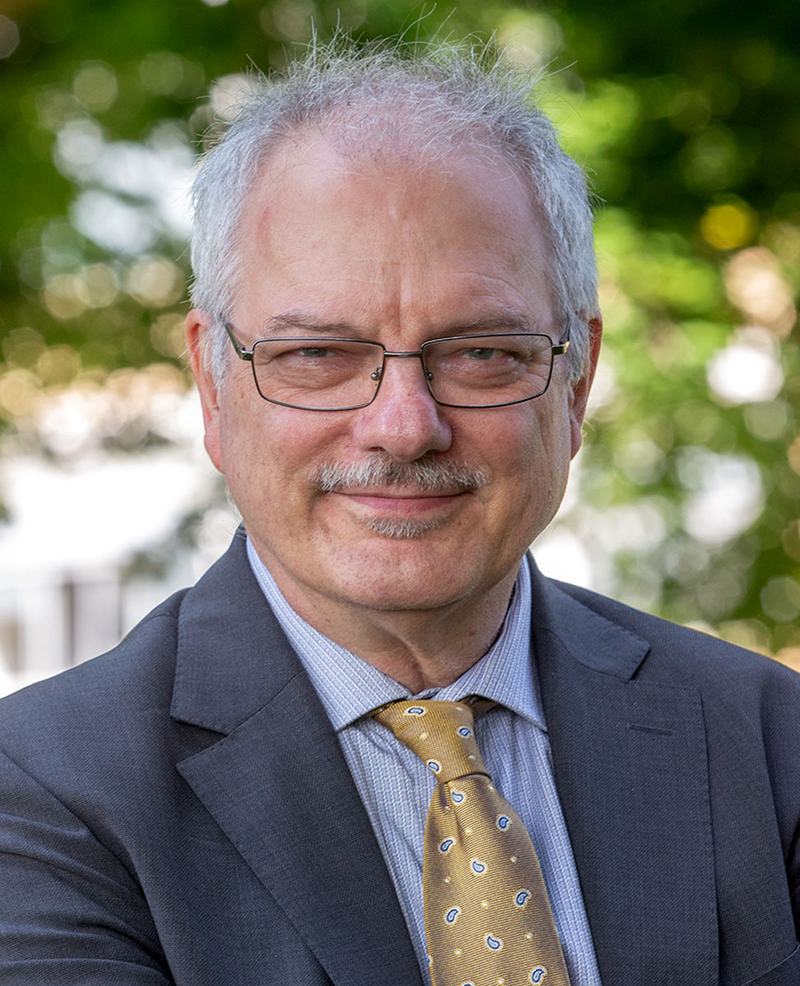
Closing Speaker
Professor of Chemistry
University of Copenhagen, Denmark
Morten Meldal is Professor of Chemistry and Head of the Center for Evolutionary Chemical Biology at the University of Copenhagen. He received the 2022 Nobel Prize in Chemistry, shared with Carolyn R. Bertozzi and K. Barry Sharpless, for the development of click chemistry and bioorthogonal chemistry. The reaction at the center of that award did not arrive in peptide science from somewhere else. It came out of it, and it was first presented here.
In June 2001, at the 17th American Peptide Symposium in San Diego, Meldal described the copper-catalyzed azide-alkyne cycloaddition to an audience of peptide chemists. He has said since that he did not know what he had. The reaction emerged from his laboratory's work on solid-phase peptide chemistry through what he later called serendipity, detailed observation and rigorous analysis, and he published it with Christian Tornøe and Caspar Christensen in The Journal of Organic Chemistry in 2002, concurrently with and independently of the Sharpless and Fokin groups. Its regiospecificity, its tolerance of water and of nearly every functional group in biology, and its orthogonality to other chemistries made it one of the most widely used transformations in chemical biology and drug development. Twenty-six years after that talk, he returns to close the 30th American Peptide Symposium.
Meldal was born in 1954 and grew up outside Copenhagen. He took his master's degree in chemical engineering at the Technical University of Denmark in 1981 and remained there for a doctorate in carbohydrate chemistry under Klaus Bock, completed in 1983. Postdoctoral positions followed at the Technical University of Denmark, the MRC Laboratory of Molecular Biology in Cambridge, and the University of Copenhagen. Cambridge is where he encountered solid-phase peptide synthesis, and the meeting of that discipline with his training in complex carbohydrates set the direction of everything afterward.
Bock invited him to establish a synthesis unit at the Carlsberg Laboratory in 1988, and the two decades that followed produced most of the tools the field now takes for granted. Recognizing that polystyrene supports served peptide chemistry poorly once the chemistry became more ambitious, Meldal designed a family of amphipathic polyethylene glycol resins – PEGA, POEPOP, SPOCC and ULTRAMINE – that swell in both aqueous and organic solvents and permit analysis and even enzymatic reactions to be performed directly on the bead. He built the first multiple-column peptide synthesizer and the first real-time spectrophotometric monitoring of on-resin coupling. He developed internally quenched fluorogenic substrates that turned protease specificity and inhibition into a readable, high-throughput measurement, and combinatorial libraries of phosphinic acid transition-state analogs that yielded nanomolar selective inhibitors of metalloproteases. In 1997 he founded the Solid Phase Organic Combinatorial Chemistry center at Carlsberg. It was in this environment, built for making and screening libraries, that the cycloaddition surfaced.
He moved to the University of Copenhagen as professor in 2011 and established the Center for Evolutionary Chemical Biology in 2013, where his group applies selection principles and combinatorial screening to molecular recognition, GPCR signaling and enzyme catalysis. The work there includes organozymes, peptide-organic constructs that fold around transition metals and chelate them through phosphines, carbenes and heterocycles to act as enzyme-like chiral catalysts on solid support; peptide cage receptors capable of binding sugars in water; and live-cell on-bead assays made possible by the biocompatibility of the resins he designed thirty years earlier.
Meldal's contributions span more than 300 publications and 21 patents. He is the founder and president of the Society of Combinatorial Sciences, received the Vincent du Vigneaud Award of the American Peptide Society in 2011, and was honored with the Hans Christian Ørsted Award in 2025 for his work in chemistry and for his role as a communicator of science to the public. He has written that great scientists are often also fine artists, a view he holds as a lifelong guitarist, and that students should learn by curiosity and in a positive spirit.
His career-long commitment to advancing peptide science, and the fact that the field's most consequential recent reaction was announced from an American Peptide Symposium podium, make him a singular voice to close the 30th American Peptide Symposium.
.jpg)