
Humboldt-Universität zu Berlin and Leibniz-FMP, Germany
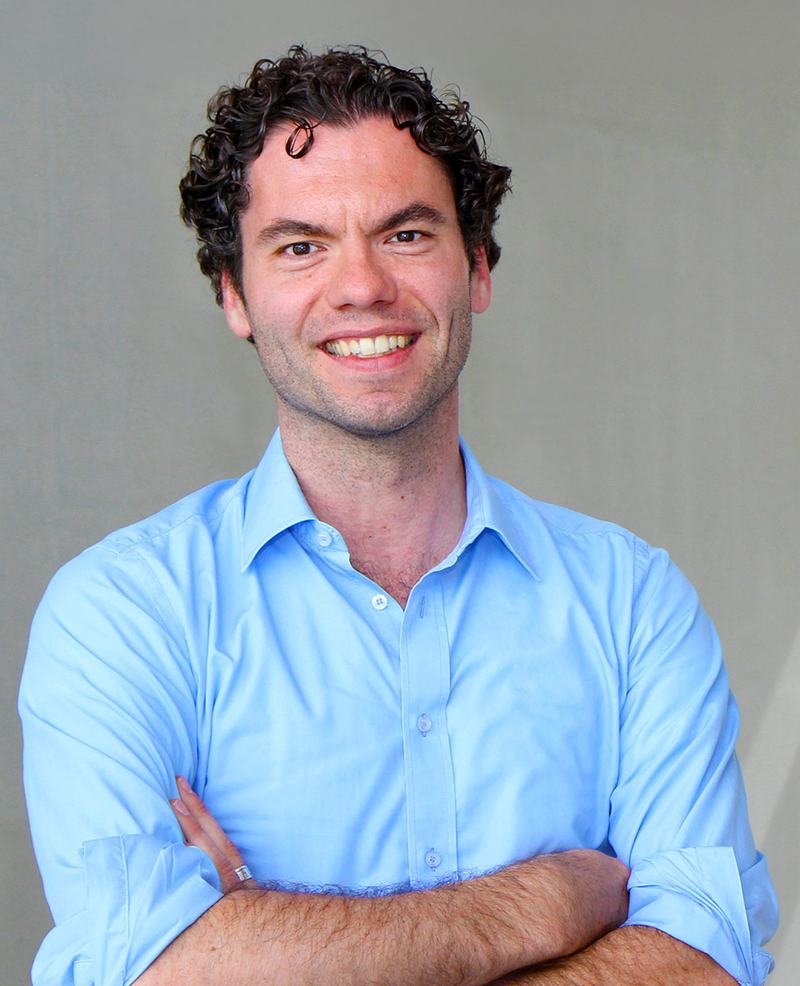
Christian Hackenberger is Leibniz-Humboldt Professor for Chemical Biology at the Humboldt-Universität zu Berlin and head of the Chemical Biology department at the Leibniz Research Institute for Molecular Pharmacology in Berlin. His work is the design of reactions that attach a payload to a protein at one chosen residue and nowhere else. That is a methodological ambition, and for most of its history it stayed one. In his case a reaction published in 2019 became a clinical candidate, and in April 2026 it became the basis of an acquisition worth up to five billion dollars.
The chemistry is the cysteine-selective ethynylphosphonamidate, now generally called P5. Antibody-drug conjugates, ADCs, have for two decades been assembled largely through maleimides, which react quickly with cysteine but give a linkage that can reverse in circulation, shedding payload where it is not wanted and eroding the therapeutic window. His group's phosphonamidate electrophiles form a linkage that does not undergo that exchange. The consequence is practical rather than aesthetic. Conjugates survive in plasma, and by 2023 his group had shown that compact hydrophilic variants of the reagent support high drug-to-antibody ratios while retaining good pharmacokinetics, which is the combination the field had been unable to reach.
In 2020 he co-founded Tubulis, a spin-off of the FMP and LMU Munich, with Jonas Helma-Smets and Dominik Schumacher, both formerly of his laboratory and co-authors on the founding papers. Its lead candidate, TUB-040, is a NaPi2b-targeted topoisomerase-I inhibitor conjugate in Phase 1b/2 trials for platinum-resistant ovarian cancer and non-small cell lung cancer. In March 2026 the team received the Friedrich Stolz Prize of the German Chemical Society and the German Pharmaceutical Society for the chemistry and the candidate together. Weeks later Gilead announced its acquisition of the company for 3.15 billion dollars in cash, rising to five billion with milestones. It is an unusually complete demonstration of a bioconjugation method, from a mechanistic argument about an electrophile to a medicine in patients.
A second line of work asks how to get large molecules into cells at all, and here peptides do the work. His group reported cell-permeable nanobodies for immunolabeling and antigen manipulation in living cells in 2017, then showed in 2021 that thiol-reactive cell-penetrating peptide additives can carry proteins and antibodies across the membrane without covalent modification of the cargo, and in 2023 that peptide additives retained at the cell surface deliver functional proteins to the cytosol. Intracellular delivery of folded proteins remains one of the field's genuinely unsolved problems, and this is among the more credible attacks on it.
The rest of the program reflects a chemist who goes where the reactivity is interesting. He has developed chemoselective routes to phosphorylated cysteine and lysine peptides, modifications too labile for conventional proteomics, and methods for their analysis. With collaborators in Berlin he built phage capsid nanoparticles displaying sialic acid ligands at defined spacing, which block influenza virus entry by matching the geometry of the viral hemagglutinin lattice. His group also works on intracellular targeting of antibodies against the Alzheimer-relevant Tau protein, on photocatalytic proximity labeling, and on metabolic oligosaccharide engineering.
He studied chemistry at Freiburg, took a master's degree with Samuel Gellman at the University of Wisconsin-Madison, and completed his doctorate summa cum laude with Carsten Bolm at RWTH Aachen in 2003. He was a postdoctoral fellow with Barbara Imperiali at MIT, with a research stay in Sheena Radford's laboratory at Leeds, before returning to Berlin in 2005 as a Liebig Scholar and Emmy Noether group leader at the Freie Universität. He habilitated in 2011 and has held his present positions since 2012. He has published more than 130 papers and trained 22 postdoctoral fellows and 34 doctoral students.
His honors include the Leonidas Zervas Award of the European Peptide Society in 2018, the AstraZeneca Protein and Peptide Science Award of the Royal Society of Chemistry and the Xiaoyu Hu Memorial Award of the Chinese Peptide Society, both in 2023, the Max Bergmann Medal in 2024, and the 2026 UCB-Ehrlich Award for Excellence in Medicinal Chemistry from the European Federation for Medicinal Chemistry. He is a Fellow of the Royal Society of Chemistry and an Associate Editor of Chemical Science.
The European and Chinese peptide societies have each recognized him for work that began as pure methodology and ended in the clinic. He comes to the 30th American Peptide Symposium with the whole of that arc behind him.