
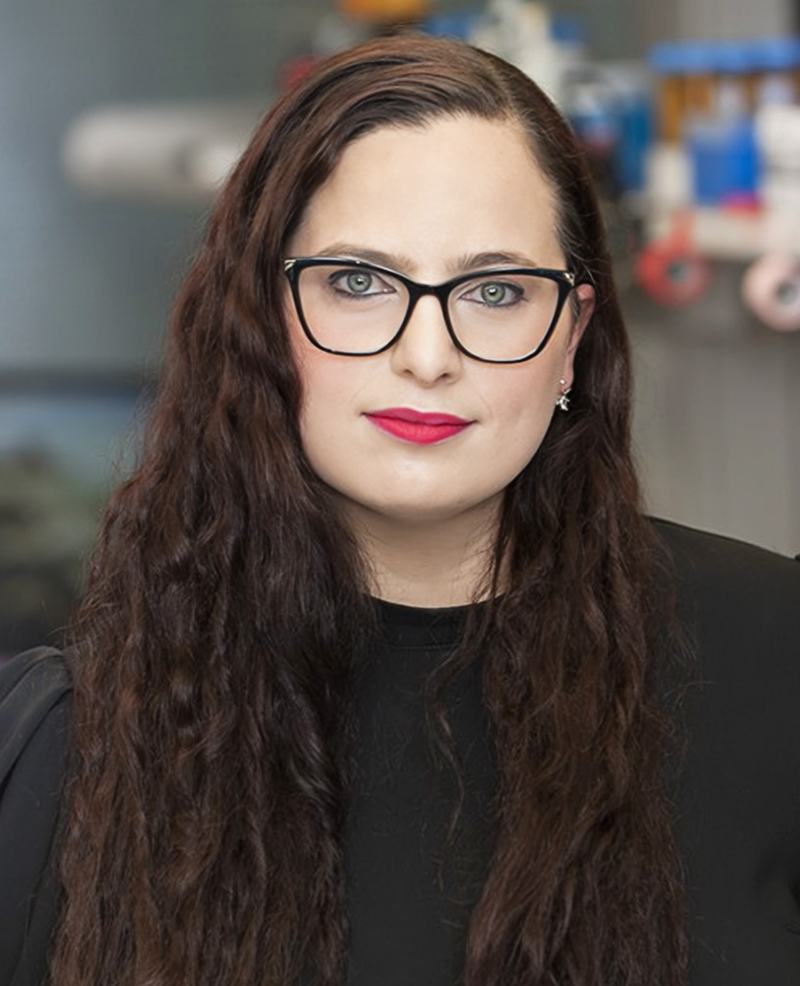
Lab Head and Associate Member
Chemical Biology Program, SKI, Memorial Sloan Kettering Cancer Center, United States
How does a cell with a single genome maintain hundreds of distinct identities, and what goes wrong when that control fails? Yael David approaches these questions as a protein chemist. At Memorial Sloan Kettering Cancer Center, where she is an Associate Member of the Chemical Biology Program at the Sloan Kettering Institute, her laboratory builds chemically defined chromatin, installing modifications on histones one site at a time, and uses it to work out how those marks regulate transcription in health and disease.
The tools come straight from peptide and protein chemistry. As a postdoctoral fellow with Tom Muir at Princeton, David used ultrafast split inteins to splice synthetic peptide cargo onto histones inside living cells, a traceless way to tag and customize native chromatin. Her group has since carried protein trans-splicing into live animals, where it allows site-specific manipulation of histones in tissue, and has developed methods to produce and characterize the human linker histone H1 variants.
These methods have opened up chemistry that enzymes do not control. The lab showed that histones accumulate non-enzymatic glycation under metabolic stress, that the damage reshapes chromatin architecture, and that cells actively reverse it, establishing non-enzymatic covalent modifications as a direct link between metabolism and the epigenome. With neuroscientist Ian Maze, the group found that a single enzyme, transglutaminase 2, writes, erases and exchanges monoamine marks on histone H3, a dynamic that promotes neural rhythmicity.
David has also taken chromatin biochemistry to places few had looked. With Samuel Bakhoum, her lab showed that chromosomes trapped in micronuclei acquire aberrant histone marks that persist after the chromosome returns to the nucleus. And by reconstituting the hepatitis B virus minichromosome from purified components, the group discovered that nucleosome occupancy switches on the viral X gene at the outset of infection, then showed that a nucleosome-destabilizing small molecule blocks infection in primary human hepatocytes.
David earned a B.Sc. in biology at Stony Brook University and a Ph.D. in biochemistry in 2011 at the Weizmann Institute of Science with Ami Navon, studying the assembly and cleavage of polyubiquitin chains. She joined MSK in 2016 as a Josie Robertson Investigator and is also an Associate Professor of Pharmacology at Weill Cornell Medicine and a faculty member of the Tri-Institutional PhD Program in Chemical Biology. Her honors include the 2019 Pershing Square Sohn Prize for Young Investigators in Cancer Research and a 2024 Sloan Research Fellowship in Chemistry.
Her work is a vivid case of what the symposium’s theme promises: peptide chemistry carried into the nucleus, and coming back with new biology.