
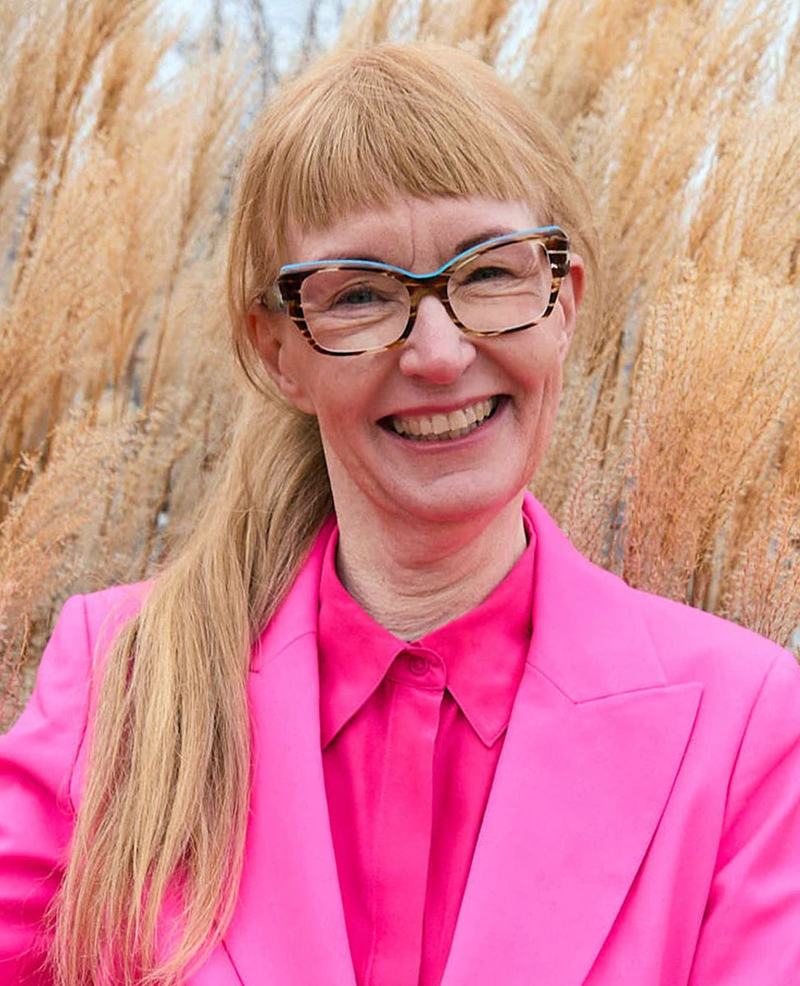
Opening Speaker
Honorary Professor in Translational Medicine
Aarhus University
Lotte Bjerre Knudsen is Honorary Professor in Translational Medicine at Aarhus University. Over a career at Novo Nordisk that ran from 1989 to 2026, most recently as Chief Scientific Advisor for Research and Development, she took a 30-residue gut hormone with a half-life of a couple of minutes and made it into a class of medicines that has changed the treatment of diabetes and obesity. If the theme of this symposium is a peptide revolution, she is one of the people who made it one.
The 2024 Lasker-DeBakey Clinical Medical Research Award, which she shared with Joel Habener and Svetlana Mojsov, was given "for the discovery and development of GLP-1-based drugs that have revolutionized the treatment of obesity." The citation divides the work almost as a relay. Habener found glucagon-like peptide-1 in the proglucagon sequence. Mojsov, our plenary speaker, synthesized the candidate forms and established by chemical means that GLP-1 7-37 is the physiologically relevant one. Bjerre Knudsen, in the Lasker Foundation's phrasing, turned it into medications. APS 2027 opens with one of those laureates and hears from another in plenary session.
She was born in 1964 in Ringsted and trained at the Technical University of Denmark, joining Novo Nordisk in 1989. Her first project was industrial enzymes, and her first discovery was a cellulase that removes pilling from cotton. She moved to diabetes research shortly afterward, and in the 1990s took on a problem most of the field considered a dead end. Native GLP-1 has striking effects on insulin secretion and appetite, but it is cleaved by dipeptidyl peptidase-4 within minutes of reaching the circulation and cleared almost as quickly by the kidney. As a drug it was, in practical terms, useless.
The solution she led was to stop treating the peptide as the whole molecule. Attaching a fatty acid through a spacer gave the analog reversible, non-covalent affinity for serum albumin, so that the great majority of circulating drug is bound and shielded, protected from enzymatic degradation and from renal clearance, and released slowly as free peptide to engage the receptor. The bound fraction becomes a depot carried by the patient's own plasma protein. That compound, liraglutide, reached approval for type 2 diabetes in 2010 as Victoza and for obesity in 2014 as Saxenda. It was the first long-acting GLP-1 receptor agonist, and the acylation principle behind it has since been applied across peptide therapeutics well beyond this hormone family.
Working with Jesper Lau and Thomas Kruse, her group then pushed the same logic further. Semaglutide pairs a stronger albumin-binding diacid and spacer with substitution at the DPP-4 cleavage site, extending the half-life from hours to about a week. It was approved as Ozempic in 2017, as Wegovy for chronic weight management in 2021, and in oral form in 2025, making it one of the very few peptides delivered successfully by mouth.
Her work did not stop at glycemic control. She has led and published mechanistic studies extending GLP-1 pharmacology into obesity, cardiovascular disease, chronic kidney disease and liver disease, and into the central nervous system, where the receptor's expression pattern and the basis of the appetite effect remain open scientific questions. She holds a doctoral degree in scientific medicine from the University of Copenhagen, awarded in 2014, and has represented Novo Nordisk before five FDA Advisory Committees.
Her recent honors include the 2023 Paul Langerhans Award of the German Diabetes Association, the 2024 Bhaumik Breakthrough of the Year Award shared with Richard DiMarchi, the 2024 Lasker-DeBakey Clinical Medical Research Award shared with Joel Habener and Svetlana Mojsov, and the 2025 Breakthrough Prize in Life Sciences shared with Daniel Drucker, Joel Habener, Jens Juul Holst and Svetlana Mojsov. She has received Lifetime Achievement Awards from Novo Nordisk, the Danish Biotech Association and Stanford University.
Few careers demonstrate as directly what this society exists to advance: a peptide, understood well enough chemically to be redesigned, becoming a medicine taken by millions. She opens the 30th American Peptide Symposium.