
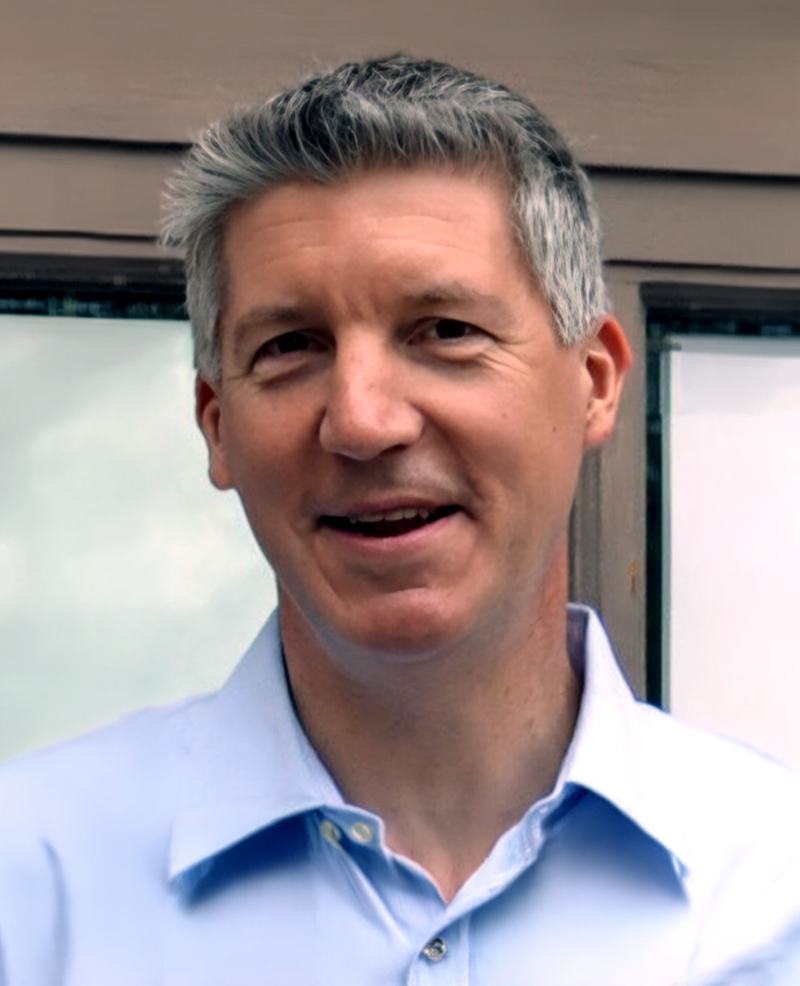
Full Professor and Head of the Institute of Biological Chemistry
University of Vienna, Austria
Christian F.W. Becker is Full Professor and Head of the Institute of Biological Chemistry at the University of Vienna. His work takes up a problem that recombinant expression cannot solve. Many of the modifications that decide whether a protein folds, aggregates, signals, or kills are installed by cells in patterns no expression system reproduces on demand, and they are installed heterogeneously, which means the resulting material cannot answer a clean mechanistic question. Becker's response has been to build the protein instead, by ligation chemistry, with the modification placed exactly where the question requires it.
The hardest cases have been his. Membrane proteins and membrane-anchored proteins misbehave at every stage of a synthesis, and his group was the first to generate a membrane-embedded enzyme by chemical protein synthesis. The same line of work opened access to the prion protein carrying its native glycosylphosphatidylinositol anchor, a construct that had resisted preparation in homogeneous form and that is necessary if one wants to study PrP where it actually sits, tethered to the outer leaflet of the membrane rather than floating free in buffer. With collaborators at the National University of Singapore, his group used that material to show that membrane-bound PrP clusters on the cell surface in a cytoskeleton-dependent manner.
Semisynthetic proteins from the group have been put to similar use elsewhere. Site-specific modification of the small heat shock protein Hsp27 with argpyrimidine, a glycation product associated with diabetic complications, showed how a single nonenzymatic modification degrades chaperone activity. Semisynthetic Tau carrying defined marks has allowed the group to ask which modifications accelerate aggregation and which suppress it, a question that demands homogeneous protein and is otherwise answered with mixtures.
Supporting all of this is a sustained program in ligation methodology. With Rolf Breinbauer in Graz he developed chemoselective palladium-catalyzed cysteine allylation and prenylation, installing a natural lipid modification on peptides and proteins under aqueous conditions. His group has introduced light-cleavable auxiliaries for diselenide–selenoester ligation, extending the reaction to junctions that native chemical ligation handles poorly. More recently the group reported convergent assembly of homotypic and heterotypic ubiquitin chains from functionalized expressed monomers by thiol-ene chemistry, work carried out within the Austrian Special Research Program on targeted protein degradation. Defined polyubiquitin architectures are what the degradation field has lacked, and chemistry is the only route to them.
A fourth line began somewhere unexpected and has stayed productive. Silaffins are the peptides that marine diatoms use to precipitate their silica shells, and they carry some of the most elaborate posttranslational modifications known. Becker's group synthesized them, worked out which modifications drive precipitation, and then turned the chemistry into a tool: proteins and enzymes encapsulated inside biomimetic silica particles under mild conditions, with controlled release, and silica formulations explored as vaccine adjuvants. Related work has produced synthetic cancer-targeting immune stimulators built entirely by solid-phase synthesis, trading the architecture of an antibody for something smaller and fully defined.
He studied chemistry at the University of Dortmund, completing his diploma in 1998 and his doctorate summa cum laude in 2001 with Roger Goody. He was a postdoctoral fellow at Gryphon Therapeutics in South San Francisco from 2002 to 2003, at the point when chemical protein synthesis was moving from feasibility to practice, and began his independent career in 2004 as a group leader at the Max Planck Institute of Molecular Physiology in Dortmund. He was appointed Professor for Protein Chemistry at the Technische Universität München and the Center for Integrated Protein Science Munich in 2007, habilitated at TU Dortmund in 2008, co-founded Syntab Therapeutics in 2010, and accepted the call to Vienna in 2011.
He received the Leonidas Zervas Award of the European Peptide Society in 2016, cited for methods for the total chemical synthesis and semisynthesis of complex modified proteins and their application to mechanistic and structural questions, and the University of Vienna Teaching Award in 2013. He was founding director of the Vienna Doctoral School in Chemistry in 2020 and became Vice Dean of the Faculty of Chemistry in 2022. As Austrian representative to the European Peptide Society he has co-organized the Austrian Peptide Symposium with Christian Gruber for more than a decade, and the two of them chaired the 38th European Peptide Symposium in Vienna in September 2026.
He arrives in Boston from a year of hosting the European peptide community in his own city, and with a body of work built on the conviction that if you want to know what a modification does, the most reliable way to find out is to put it there yourself.